Understand How Conflict Works

Most disputes you will be asked to help with do not arrive labelled. Two colleagues stop copying each other on emails. A project meeting turns sharp every Thursday. A team splits over whether a supplier's shortcut is acceptable. Before you can help anyone settle anything, you need to read what is actually going on.
This chapter teaches that reading. The first page shows where workplace conflict comes from, sorting disputes into tasks, process, relationships and values. The second explains how disputes escalate, using Friedrich Glasl's nine-stage model [2]. It also covers the five Thomas-Kilmann conflict modes, named after Kenneth Thomas and Ralph Kilmann [1]. The third sets out what a neutral third party can and cannot do.
By the end you will be able to diagnose the source, stage and style of a conflict before choosing how to intervene.
Where workplace conflict comes from
Understand How Conflict Works

Conflict at work is a clash between people who depend on each other and believe their goals, methods or standards cannot all be met. Dependence matters. Two strangers who disagree are not in conflict. Two colleagues sharing a deadline are.
Four sources of disagreement
Sort disputes by what the disagreement is actually about. Most fall into one of four sources:
- Task: what the work should be. The content, the right answer, the priority or the quality bar.
- Process: how the work gets done. Who owns which step, who decides, how time and resources are shared.
- Relationship: how people feel about each other. Irritation, mistrust, perceived disrespect.
- Values: what people believe is right. Fairness, honesty, ethics, what the organisation should stand for.
Each source responds to a different kind of help. Task conflict often eases with better information. Process conflict eases with clearer roles and agreed rules. Relationship conflict needs people to feel heard and to rebuild trust. Values conflict rarely ends with someone changing their mind, so the aim shifts to working together despite the difference.
Sorting a real dispute
Suppose Emma, a junior business analyst at an insurance firm in Pune, is asked to help two colleagues who keep clashing. The developer says the testers reject work for trivial reasons. The tester says he ignores the acceptance criteria. On the surface it looks like a task dispute about quality.
Emma listens to each separately. The developer's real complaint is that bugs arrive with no priority, so he cannot tell what matters. The tester's is that nobody agreed who signs off acceptance criteria. That is process conflict. Then the developer mentions twice that the tester 'went over his head' to the manager last month. A relationship strand has grown on top. Arguing over whether one bug is trivial would miss both layers.
How to diagnose the source
- Listen for the words people repeat. 'The deadline' points to task. 'Who decides' points to process. 'Her attitude' points to relationship. 'It's not fair' points to values.
- Ask what would have to change for the problem to disappear. The answer usually reveals the real source.
- Check for layers. Long-running disputes almost always pick up a relationship strand, whatever started them.
- Name the root and the layer separately before you decide anything.
Mistakes when diagnosing
The commonest mistake is taking the first complaint at face value. People describe conflict in the most respectable terms available, so a personal grievance often arrives dressed as a task disagreement. The second is calling everything a 'personality clash'. That label sounds insightful but closes off every fix except moving someone. The third is treating a values dispute as a misunderstanding that more explanation will cure. More explanation usually hardens positions instead.
One line before you act
Write one sentence naming the root source and any layer on top. If you cannot write it yet, you are not ready to intervene.
How disputes escalate and the five conflict modes
Understand How Conflict Works

Left alone, most disputes fade or get worse. When they get worse, they change character, not just volume. Friedrich Glasl's model of conflict escalation describes nine stages, grouped into three broad phases [2].
- Stages 1 to 3, the win-win phase: positions harden, debate turns into point-scoring, and people start acting instead of talking. Both sides still believe a shared solution is possible.
- Stages 4 to 6, the win-lose phase: each side sees the other as the problem, recruits allies, attacks reputations and makes threats. The goal becomes winning.
- Stages 7 to 9, the lose-lose phase: each side accepts damage to itself as long as the other is hurt more [3].
Escalation shifts how people perceive, feel and behave, not only what they argue about [2]. In the first phase, a colleague can help two people talk. In the second, they need structure and a trained neutral. In the third, informal peer help is out of its depth and formal processes take over.
Five ways people handle conflict
Kenneth Thomas and Ralph Kilmann described five conflict-handling modes, set on two dimensions: assertiveness (how far you pursue your own concerns) and cooperativeness (how far you pursue the other person's) [1].
- Competing: high assertiveness, low cooperativeness. 'We are doing it my way.'
- Collaborating: high on both. 'Let's find something that fully works for both of us.'
- Compromising: moderate on both. 'Meet me halfway.'
- Avoiding: low on both. Missed meetings, changed subjects, 'let's leave it for now.'
- Accommodating: low assertiveness, high cooperativeness. 'Fine, do it your way.'
No mode is good or bad in itself. Competing is right when quick action is vital, as in a safety emergency. Avoiding makes sense when an issue is trivial. Trouble starts when someone uses one mode out of habit, or when two people's habits lock together.
Spotting modes in behaviour
Suppose Leo, a project coordinator at a renewable energy consultancy in Hamburg, is asked to help with friction between two engineers. One answers every design query with a firm rule and a deadline. The other agrees in meetings, then quietly does it his own way. Leo reads the first engineer as competing, and the second as accommodating on the surface and avoiding underneath. Acting instead of talking is a sign the dispute sits late in the first phase. Leo concludes the two can still share one conversation, but the quieter engineer needs a safe way to say what he really thinks.
Common misreadings
People mistake accommodating for agreement. Quick acceptance can be a mode, not a resolution. Others treat compromise as the ideal, yet splitting the difference can leave both people with something that fails. Finally, a mode describes behaviour in a situation, not a fixed personality. Labelling someone 'a competitor' gives them a reputation to defend.
Two notes for every dispute
Record the phase of escalation and each person's dominant mode. Together they tell you how much help is needed and what kind.
The role of a neutral third party in mediation
Understand How Conflict Works

A neutral third party helps two or more people in a dispute reach their own agreement. The key word is own. In mediation, the parties decide the outcome. The mediator manages the process. That distinction shapes everything you do.
What you can and cannot do
The limits of the role
Set up a structured, safe conversation
Make sure each person is fully heard
Help people look past positions to underlying concerns
Test whether proposals will actually work
Summarise and record what the parties agree
Decide who is right
Impose a solution
Act as either person's advocate
Promise pay, promotion or discipline outcomes
Replace formal procedures where they are required
That last limit needs care. Where a dispute involves allegations of harassment, discrimination, safety breaches or misconduct, organisations usually have formal procedures, and employment law often shapes them. The rules differ by country and change over time. Your job then is to recognise the trigger and route the matter correctly, not to mediate it away.
Neutrality has two sides. Impartiality means you favour neither person's view. Independence means you have no stake in the outcome. An early-career professional helping peers rarely has full independence. If one person is your friend or your manager, say so, or step aside.
Real case: Acas
In 2016 the conciliation service Acas hosted talks between the government, NHS Employers and the British Medical Association over a new contract for junior doctors in England. Acas ran the talks. It did not set the terms. On 18 May 2016 Acas announced a deal agreed by all parties. On 5 July, junior doctors and medical students in the BMA rejected it in a referendum, 58% to 42% on a 68% turnout [4]. The lesson for you: a neutral third party can help people reach an agreement, but it holds only if those who live with it accept it.
Deciding whether to step in
Suppose Sara, an HR assistant at a regional bank in Lagos, is asked by a branch manager to 'sort out' two tellers who have stopped speaking. Before agreeing, she checks three things. The source and stage: a rota dispute with a growing relationship strand, still in the first phase. Any formal trigger: one teller has hinted at bullying. Her own neutrality: she trained alongside one of them. She tells the manager the bullying hint must go through the bank's grievance route, and that a colleague with no connection should handle any mediation.
- Confirm both people are willing. Mediation forced on someone rarely holds.
- Check for formal triggers before you begin.
- Declare any connection to either party.
- Agree with whoever asked for help that the outcome belongs to the parties.
Common mistakes
New mediators often slide into judging, especially when one side seems more reasonable. Others propose their own solution early, which turns the parties against the idea or against them. A quieter mistake is promising confidentiality you cannot keep. Be clear at the start about what stays in the room and what you would have to report.
Your power comes from not deciding
Protect your neutrality, know your limits, and hand the outcome back to the people who own the dispute.
Checkpoint
Understand How Conflict Works
What good looks like
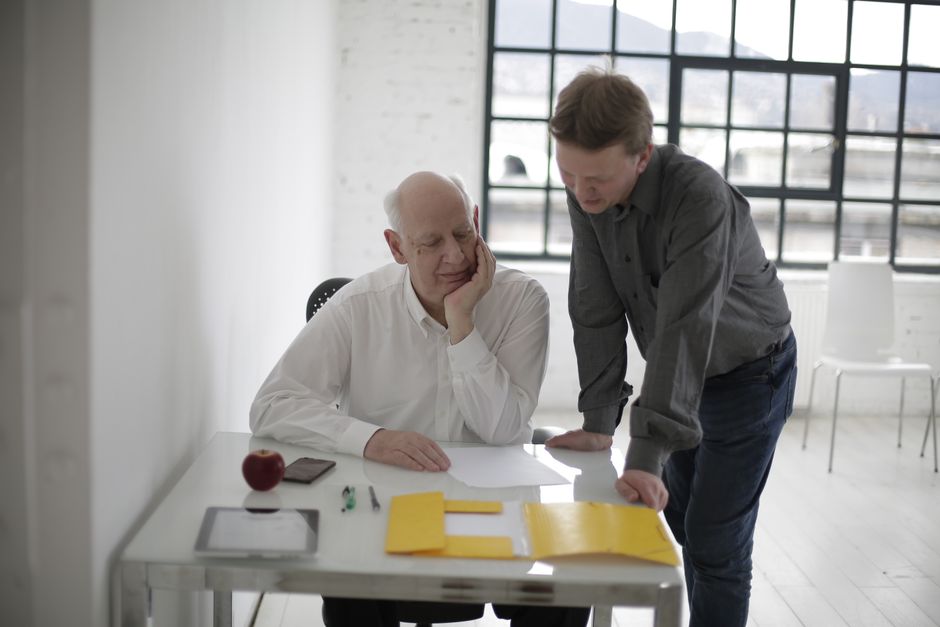
You hear each person separately before bringing them together. You name the root source of the dispute and any layer growing on top, whether task, process, relationship or values. You judge how far it has escalated using Glasl's phases, and you recognise each person's habitual mode, such as competing or avoiding. You check for formal triggers and declare any connection that weakens your neutrality. Then you take the role of a neutral third party: you run the process and leave the decision with the people who own the dispute. You can now diagnose a conflict before choosing how to mediate it.
This chapter
- Task conflict BIZ
- Disagreement about the content of the work itself, such as the right answer, priority or quality standard.
- Relationship conflict BIZ
- Friction rooted in how people feel about each other, such as mistrust, irritation or perceived disrespect.
- Thomas-Kilmann conflict modes BIZ
- Five conflict-handling styles (competing, collaborating, compromising, avoiding, accommodating) defined by assertiveness and cooperativeness, from Kenneth Thomas and Ralph Kilmann.
- Conflict escalation BIZ
- The process by which a dispute intensifies and changes character, described by Friedrich Glasl in nine stages.
- Neutral third party BIZ
- Someone outside a dispute who manages the process of resolving it while the parties decide the outcome.
- Impartiality BIZ
- Not favouring either side's view in a dispute, a core requirement for anyone acting as mediator.