Mastering the Internal Dialogue

Most difficult conversations are lost before anyone opens their mouth. You walk into the meeting carrying assumptions, feelings you haven't examined, and an itch to react. All of that noise colours what you hear and how you answer. And once blame and defensiveness start feeding each other, strategic thinking goes out of the window: you stop trying to solve the problem and start trying to win the argument. This chapter covers the work you do on yourself first, so that what you say out loud stays professional and gets results.
The method is to slow down your own processing. First comes the Ladder of Inference, which shows how quickly you leap to conclusions. After that you'll learn the physical warning signs of stress that turn up before communication breaks down. Then you'll practise narrowing your aim to one workable goal, and mapping what the person opposite you needs. By the end of the chapter you should have a preparation routine you can rely on, one that swaps reactive outbursts for constructive dialogue.
The ladder of inference and how to climb down it
Mastering the Internal Dialogue

Your brain prefers fast to accurate. Under pressure in a meeting it works in milliseconds, picking out a few details, giving them a personal meaning and settling on a conclusion. Chris Argyris called this the Ladder of Inference, and he developed it to explain how two people can look at the same set of facts and come away with completely different conclusions. By the time you reach the top rung, you're acting on beliefs that you treat as objective truth. That's the point where communication breaks down. You've stopped talking about facts and started talking about your own stories.
Seven rungs, from data to action
- Observable Data: the raw facts, what a video recording of the event would show.
- Selected Data is the slice you keep, filtered through what you already believe.
- Added Meaning: you read the data through your own particular context.
- Then come Assumptions, where you fill in the gaps about why the other person did what they did.
- Conclusions: you decide what the situation is and how it's going to end.
- Beliefs harden next, into a firm view of the person or the project.
- Actions: you react on the strength of those beliefs, often defensively.
To communicate constructively you have to climb back down, from your actions and beliefs to the observable data. Ask yourself 'What did I actually see and hear?' instead of 'What do I think they meant?'
Worked Example: The Missed Deadline
A Senior Marketing Manager at a consumer goods firm sees that a colleague, Sarah, has missed the deadline for a campaign brief. Going up the ladder, the reasoning runs like this. Sarah missed the deadline (Data), so she doesn't value my project (Meaning), so she's being disrespectful (Assumption), so she's a poor teammate (Conclusion), so I'll stop sharing resources with her (Action). Coming back down, the manager sees that the only observable fact is that the brief isn't in the inbox. So they stop and ask: 'What facts am I missing? Did I confirm the deadline was understood?'
Working it through in the moment
- Identify the Action: notice the moment you feel angry or ready to confront someone.
- Trace the steps back. What conclusion have you already reached about them?
- Find the meaning you added, the specific interpretation you laid over their behaviour.
- Return to Data and list only what a camera would have captured.
- Test the Data by asking the other person to help you understand how they see those particular facts.
Common Mistake
This one is confusing 'your truth' with 'the truth', and many professionals do it, treating their own interpretations as facts. Open with 'The fact is, you don't care about this project' and you've led with a conclusion from the top of your ladder. Expect the other person to get defensive straight away.
The habit narrows the communication gap because your opening line rests on what actually happened. People tend to work with someone who speaks from the bottom of the ladder. They push back against someone speaking from the top.
Try this before your next meeting
Before any tense meeting, write down three facts about the situation that nobody could argue with. Open the conversation with those facts and nothing else.
Identifying physical signs of your own stress response
Mastering the Internal Dialogue

When your body is in a state of high alarm, constructive communication is physically impossible. Any threat you perceive, including a social one like criticism of your work, sets off the fight-or-flight response. Psychologist Daniel Goleman called this an amygdala hijack. Stress chemicals temporarily weaken the prefrontal cortex (the part of the brain responsible for logic and empathy) while your body gets ready to act. You become faster and stronger. You also get worse at thinking with any nuance. So staying in control starts with learning to read your body as an early warning system.
The signals that arrive first
Stress reaches your body before it reaches your conscious mind. By the time you realise you're angry, the signals have often been running for some time. Wait until you're shouting or firing off a sharp email and you've left it too late. What you want to catch are the small signals right at the start of the stress cycle.
- Temperature: a sudden flush of heat in your neck or face.
- Your jaw clenches, your shoulders tighten, or you notice you're gripping your pen too hard.
- Breathing turns shallow and moves up into the chest.
- Hearing can change too, with a slight ringing in the ears or a sense that the room has gone quieter.
- Digestive cues: a sudden knot in the stomach, or a wave of nausea.
Worked Example: The Budget Cut
A Director of Operations at a tech firm is told in a meeting that their department's budget is being cut by 15 per cent. Their heart rate spikes and their face goes hot. The words that want to come out are 'This is a disaster and shows you don't understand our workflow'. But they recognise the heat in their face as a stress signal. They take one slow breath and put their hands flat on the table, and that small piece of physical grounding gives them room to pause. What they actually say is 'I need a moment to process these numbers before we discuss the impact'.
Scan, Name, Regulate
When you feel a conversation tightening, use the Scan, Name, Regulate method. Scan your body from head to toe for tension. Name the sensation to yourself ('I feel my jaw clenching'). Then regulate it with a physical action that works against the stress, such as unclenching your teeth or breathing out slowly.
- Scan: jaw, shoulders, hands.
- Name the physical feeling silently, to yourself.
- Regulate with one deep breath or a change of posture.
- Then pause for five seconds before you say anything.
Misconception: suppression vs. awareness
Many professionals believe that staying 'professional' means ignoring what their body is telling them. Ignoring the stress response doesn't make it go away, though. Sooner or later it leaks out as sarcasm, a sharp tone or a poor decision. Awareness lets you manage the response instead of pushing it down.
Handling your physical response narrows the gap because it keeps the logical part of your brain working. You stay in the 'Executive Suite' of your brain, where you can choose your words with care rather than go with your first impulse.
Find your tell
Work out your primary 'tell'. For most people it's either a tight jaw or shallow breathing. During ordinary work, check that one spot three times a day, and keep at it until the awareness becomes a habit.
Writing a one-sentence goal for the interaction
Mastering the Internal Dialogue
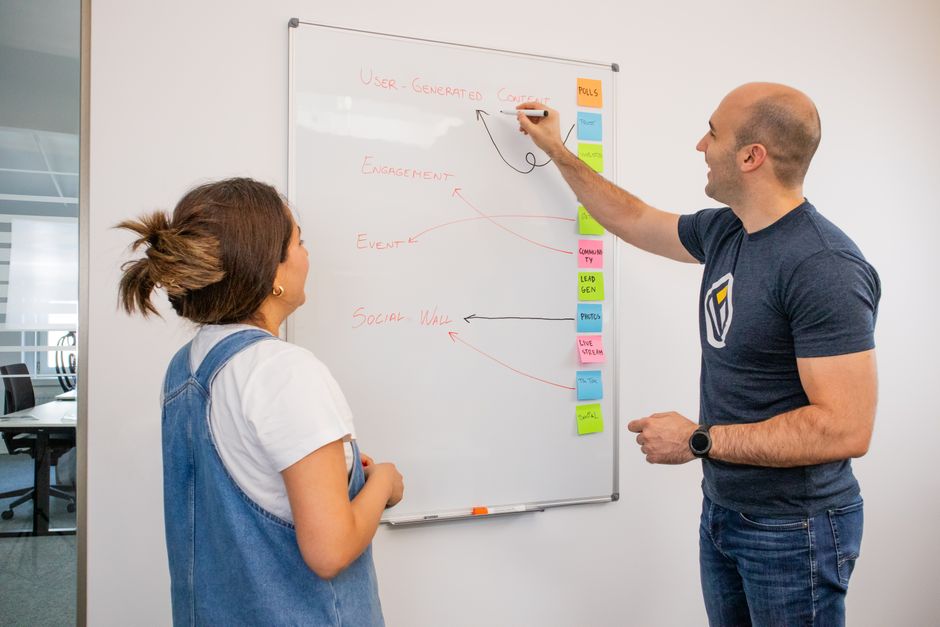
Ask what people want out of a difficult conversation and often they can't tell you, which is a big part of why these conversations fail. They arrive with a vague sense of frustration and a list of complaints. That leads to 'kitchen sinking', where every past grievance gets thrown into the current discussion. Constructive communication needs one clear, workable goal, and if you can't state yours in a single sentence, you aren't ready to have the conversation.
Running the 'In Order To' Test
Wanting to change the other person's personality, or to make them admit they were wrong, is an ego goal. Ego goals almost always fail. A constructive goal is about a future behaviour or a specific business outcome, and the 'In Order To' framework is how you test which kind you've got.
Finish this sentence: I am having this conversation in order to [Specific Action or Agreement].
Ego Goals vs. Workable Goals
I want them to apologise for being rude.
I want to show them why their plan is stupid.
I want them to acknowledge my hard work.
I want to agree on a standard for professional feedback.
I want to identify the risks in the current plan.
I want to clarify the criteria for the next promotion cycle.
From grievance to goal
- Draft the grievance first, writing down everything you're upset about.
- Strip out the emotion. Delete any word that describes how you feel or how they acted.
- Identify the Need: look at what's left and find the core business requirement in it.
- Write the sentence, starting with 'I want to...' and finishing on a concrete outcome.
- Verify it with one question: 'Is this goal within the other person's power to grant?'
Worked Example: The Overbearing Partner
A Partner at a law firm is fed up with a colleague who keeps interrupting them in front of clients. The first thought is not a charitable one: I want him to stop being such an arrogant jerk. Once it's been worked on, the goal reads: I want to agree on a protocol for who speaks during client presentations so that we present a unified front.
Common Mistake
The trap here is a goal that only works if the other person feels a certain way. You can't control someone else's feelings. What you can negotiate is what they do. Set the goal as 'I want them to respect me' and you'll probably be disappointed, whereas 'I want them to stop CCing my boss on minor errors' is an outcome you can actually work towards.
A defined goal narrows the gap by giving the conversation a fixed point of reference. When the discussion gets heated or drifts off-track, your one-sentence goal is what pulls it back to the solution.
The sticky-note rule
Before your next meeting, write your one-sentence goal on a sticky note. If you catch yourself arguing about something that doesn't serve it, stop talking.
Mapping the potential needs of the other person
Mastering the Internal Dialogue

We often see difficult people as obstacles, or even enemies. Once you do, constructive communication becomes nearly impossible, because you've assumed they're acting out of malice. Most professional conflict actually comes from competing needs or different pressures. Getting to a workable outcome means stepping outside your own perspective for a while and mapping what might be driving the other person's behaviour. You do it for strategic reasons. Whether it feels 'nice' doesn't come into it.
A needs inventory
In a professional setting most people are driven by a small set of universal needs, and when someone is being 'difficult' it's usually because one of those needs feels threatened. There are five worth checking.
1. Autonomy, the need to control their own work and decisions. 2. Competence, the need to be seen as capable and skilled. 3. Relatedness, the need to feel part of the team or valued by the group. 4. Security, the need to feel that their job or status is safe. 5. Efficiency, the need to get things done without unnecessary hurdles.
Worked Example: The Resistant IT Manager
A Marketing Lead wants to bring in a new software tool, and the IT Manager is blocking it. As the Marketing Lead sees it, he's just being a gatekeeper and slowing everyone down. Map his needs, though, and the picture changes. The IT Manager is likely under pressure over data security (Security), and he has limited staff to support new tools (Efficiency). So the Marketing Lead stops arguing about the tool's features. The conversation moves to how they can meet security compliance and keep the support burden on the IT team to a minimum.
Mapping the other side
- Pin down the 'difficult' behaviour. What specifically are they doing that bothers you?
- Hypothesise the threat: which of the five professional needs might they feel is at risk?
- Look for external pressures as well. What is their boss asking of them, and what are their KPIs?
- Find the overlap, the place where their need for [Security/Efficiency/etc.] lines up with your goal.
- Frame the ask so that your goal protects or strengthens their needs.
Common Mistake
The usual slip is treating 'understanding' as if it meant 'agreeing'. You can understand that a colleague is acting out because they feel their competence is being questioned, and still not accept the behaviour. Understanding their need gives you the data to change the dynamic.
Mapping needs narrows the gap by taking the personal sting out of friction at work. Once you read a colleague's behaviour as a response to pressure, you don't have to defend yourself against it, and you can get on with solving the problem.
Their shoes, their targets
Ask yourself: 'If I were in their position, with their boss and their targets, why would my current request look like a bad idea?' Then use the answer to refine your approach.
Checkpoint
Mastering the Internal Dialogue

That's the internal preparation, in four parts. Climbing down the Ladder of Inference gets you back to the facts. Recognising your body's stress signals lets you catch yourself early. You define a goal that is clear and workable, and you map the needs of the person across the table. Taken together, these steps turn a tense encounter from an emotional battle into a strategic negotiation.
Scenario: the sudden project pivot
Signs you're doing this well
- After a trigger, you wait at least sixty seconds before responding.
- You can list the facts of the situation without a single adjective or adverb.
- Before you speak, your body is relaxed: shoulders down, jaw loose.
- The goal you've set concerns a future action, not a past grievance.
- You've identified at least one pressure your counterpart is facing.
Questo capitolo
- Ladder of Inference CUL
- A mental model describing the thinking process of going from a fact to a decision or action.
- Amygdala Hijack KEY
- An immediate and overwhelming emotional response that is out of proportion to the actual stimulus, triggered by a perceived threat.
- Observable Data KEY
- Raw information and facts that can be proven or witnessed without interpretation.
- Workable Outcome BIZ
- A specific, achievable goal for a conversation that focuses on future behaviours rather than past emotions.
- Needs Inventory BIZ
- A strategic framework for identifying the core professional motivations (like autonomy or security) of another person.