Understand How Conflict Works

Two colleagues stop copying each other on emails. A project meeting turns sharp every Thursday. A team splits over whether a supplier's shortcut is acceptable. Most disputes you'll be asked to help with arrive like this, unlabelled, and you have to read what's really going on before you can help anyone settle anything.
That reading is what this chapter teaches. You'll start with where workplace conflict comes from, sorting disputes into task, process, relationship and values. Next comes escalation, using Friedrich Glasl's nine-stage model2, along with the five Thomas-Kilmann conflict modes (named after Kenneth Thomas and Ralph Kilmann1). The third page sets out what a neutral third party can do, and what it can't.
By the end you'll be able to diagnose a conflict's source, stage and style before you choose how to intervene.
Where workplace conflict comes from
Understand How Conflict Works

Two strangers who disagree aren't in conflict. Two colleagues sharing a deadline are. Conflict at work is a clash between people who depend on each other and believe their goals, methods or standards can't all be met, and it's the dependence that turns a disagreement into conflict.
Four places disagreement comes from
Start by asking what the argument is really about. Most disputes come from one of four sources:
- Task, meaning what the work should be: its content, the right answer, the priority or the quality bar.
- Process, or how the work gets done. Who owns which step, who decides, how time and resources are shared.
- Relationship. This one is about how people feel about each other, so expect irritation, mistrust or a sense of being disrespected.
- Values: what people believe is right, whether that's fairness, honesty, ethics or what the organisation should stand for.
The four need different kinds of help. Better information often eases a task conflict; clearer roles and agreed rules ease a process one. Relationship conflict needs people to feel heard and to rebuild trust. Values conflict rarely ends with anyone changing their mind, so the aim shifts to working together despite the difference.
Sorting a dispute in practice
Suppose Sneha, a junior business analyst at an insurance firm in Pune, is asked to help two colleagues who keep clashing. According to the developer, the testers reject work for trivial reasons. According to the tester, the developer ignores the acceptance criteria. On the surface it's a task dispute about quality.
She listens to each separately, and the picture shifts. The developer's real complaint is that bugs arrive with no priority, so he can't tell what matters. The tester's is that nobody agreed who signs off acceptance criteria. That's process conflict. Then the developer mentions, twice, that the tester 'went over his head' to the manager last month, so a relationship strand has grown on top. Arguing over whether one bug is trivial would miss both layers.
Finding the source
- Listen for the words people repeat. 'The deadline' points to task, 'who decides' to process, 'her attitude' to relationship and 'it's not fair' to values.
- Ask what would have to change for the problem to disappear. The answer usually gives the real source away.
- Look for layers. Whatever started a long-running dispute, it almost always picks up a relationship strand along the way.
- Before you decide anything, name the root and the layer separately.
Where diagnosis goes wrong
The commonest mistake is taking the first complaint at face value. People describe conflict in the most respectable terms available, so a personal grievance often turns up dressed as a task disagreement. Calling everything a 'personality clash' is the next trap: the label sounds insightful, yet it closes off every fix except moving someone. And treating a values dispute as a misunderstanding that more explanation will cure tends to backfire, because more explanation usually hardens positions.
One line before you act
Write one sentence naming the root source and any layer on top of it. If you can't write it yet, you aren't ready to intervene.
How disputes escalate and the five conflict modes
Understand How Conflict Works

Left alone, most disputes fade or get worse, and the ones that get worse change in character as well as volume. Friedrich Glasl's escalation model maps that slide in nine stages, grouped into three broad phases2.
- Stages 1 to 3 are the win-win phase. Positions harden, debate becomes point-scoring and people start acting instead of talking, yet both sides still believe a shared solution is possible.
- In stages 4 to 6, the win-lose phase, each side sees the other as the problem. They recruit allies, attack reputations and make threats, because the goal has become winning.
- Stages 7 to 9 make up the lose-lose phase, where each side will accept damage to itself as long as the other is hurt more3.
As a dispute escalates, what people argue about changes, and so does how they perceive, feel and behave2. In the first phase a colleague can help two people talk. The second calls for structure and a trained neutral. By the third, informal peer help is out of its depth and formal processes take over.
The five conflict-handling modes
Kenneth Thomas and Ralph Kilmann placed five conflict-handling modes on two dimensions. One is assertiveness, how far you pursue your own concerns. The other is cooperativeness, how far you pursue the other person's1.
- Competing sits high on assertiveness and low on cooperativeness. 'We are doing it my way.'
- Collaborating is high on both: 'Let's find something that fully works for both of us.'
- Compromising: moderate on both. 'Meet me halfway.'
- Avoiding is low on both, and it shows up as missed meetings, changed subjects and 'let's leave it for now.'
- Accommodating means low assertiveness with high cooperativeness. 'Fine, do it your way.'
None of these is good or bad in itself. Competing is right when quick action is vital, as in a safety emergency, and avoiding makes sense when an issue is trivial. Trouble starts when someone uses one mode out of habit. Or when two people's habits lock together.
Reading modes from what people do
Suppose Leo, a project coordinator at a renewable energy consultancy in Hamburg, is asked to help with friction between two engineers. One answers every design query with a firm rule and a deadline. The other agrees in meetings, then goes off and does it his own way. Leo reads the first as competing, and the second as accommodating on the surface but avoiding underneath. They've started acting instead of talking, which places the dispute late in the first phase. So the two can still share one conversation, Leo concludes, though the quieter engineer needs a safe way to say what he really thinks.
Misreading the modes
It's easy to mistake accommodating for agreement, when quick acceptance may just be someone's mode and nothing is resolved. Compromise gets treated as the ideal, yet splitting the difference can leave both people with something that fails. And a mode describes behaviour in a situation, not a fixed personality; label someone 'a competitor' and you've given them a reputation to defend.
Two notes for every dispute
Note the phase of escalation and each person's dominant mode. Together they tell you how much help is needed, and what kind.
The role of a neutral third party in mediation
Understand How Conflict Works

In mediation the outcome isn't yours to decide. A neutral third party helps two or more people in a dispute reach their own agreement: the parties decide the outcome and the mediator manages the process. That division shapes everything you do.
What the role allows and what it doesn't
The limits of the role
Set up a structured, safe conversation
Make sure each person is fully heard
Help people look past positions to underlying concerns
Test whether proposals will actually work
Summarise and record what the parties agree
Decide who is right
Impose a solution
Act as either person's advocate
Promise pay, promotion or discipline outcomes
Replace formal procedures where they are required
Take care with that last limit. Where a dispute involves allegations of harassment, discrimination, safety breaches or misconduct, organisations usually have formal procedures, and employment law often shapes them. The rules differ by country and change over time. Your job then is to recognise the trigger and route the matter correctly. It is not to mediate it away.
Neutrality has two parts. Impartiality means you favour neither person's view; independence means you have no stake in the outcome. Helping peers early in your career, you'll rarely have full independence. If one of them is your friend or your manager, say so, or step aside.
Real case: Acas
In 2016 the conciliation service Acas hosted talks between the government, NHS Employers and the British Medical Association over a new contract for junior doctors in England. Acas ran the talks; it did not set the terms. On 18 May 2016 Acas announced a deal agreed by all parties. Then on 5 July, junior doctors and medical students in the BMA rejected it in a referendum, 58% to 42% on a 68% turnout4. A neutral third party can help people reach an agreement, but that agreement holds only if the people who have to live with it accept it.
Deciding whether you should step in
Suppose a branch manager asks Folake, an HR assistant at a regional bank in Lagos, to 'sort out' two tellers who have stopped speaking. Before agreeing, she checks three things. The source and stage look like a rota dispute with a growing relationship strand, still in the first phase. There is a formal trigger, since one teller has hinted at bullying. And her own neutrality is in doubt because she trained alongside one of them. She tells the manager the bullying hint must go through the bank's grievance route, and that a colleague with no connection should handle any mediation.
- Confirm both people are willing, since mediation forced on someone rarely holds.
- Before you begin, check for formal triggers.
- Declare any connection you have to either party.
- Agree with whoever asked for help that the outcome belongs to the parties.
Where new mediators slip
When one side seems more reasonable, new mediators often slide into judging. Some put forward their own solution early, and the parties turn against the idea, or against the mediator. A less obvious mistake is promising confidentiality you can't keep, so be clear at the start about what stays in the room and what you would have to report.
Hand the outcome back
Guard your neutrality and know where your role stops. The outcome belongs to the people who own the dispute, so give it back to them.
Checkpoint
Understand How Conflict Works
What good looks like
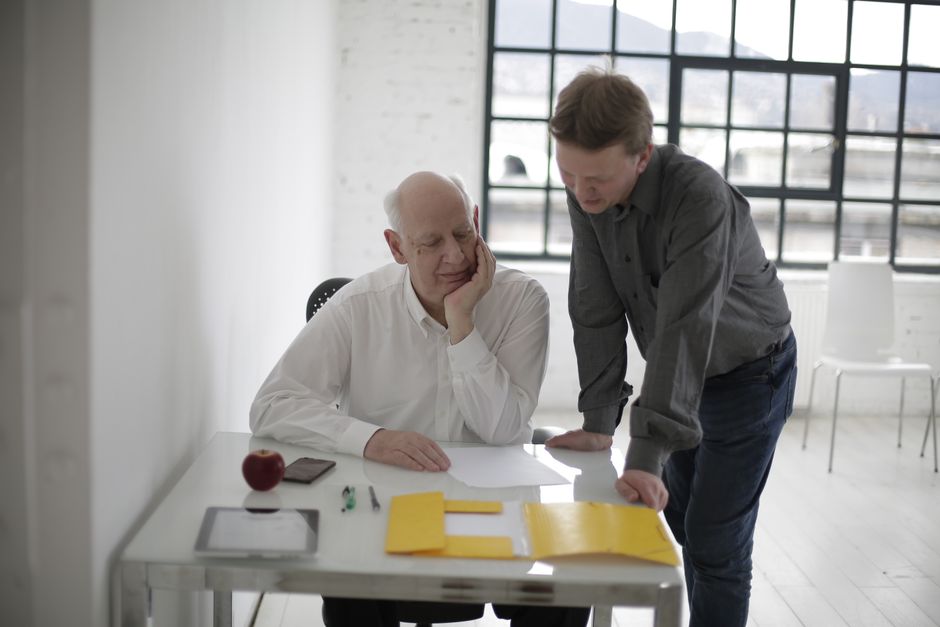
Before bringing two people together, you hear each separately. You name the root source of the dispute and any layer growing on top, whether task, process, relationship or values. Glasl's phases show how far it has escalated, and you recognise each person's habitual mode, such as competing or avoiding. You check for formal triggers and declare any connection that weakens your neutrality. Then you act as a neutral third party, running the process and leaving the decision with the people who own the dispute. You can now diagnose a conflict before choosing how to mediate it.
Este capítulo
- Task conflict BIZ
- Disagreement about the content of the work itself, such as the right answer, priority or quality standard.
- Relationship conflict BIZ
- Friction rooted in how people feel about each other, such as mistrust, irritation or perceived disrespect.
- Thomas-Kilmann conflict modes BIZ
- Five conflict-handling styles (competing, collaborating, compromising, avoiding, accommodating) defined by assertiveness and cooperativeness, from Kenneth Thomas and Ralph Kilmann.
- Conflict escalation BIZ
- The process by which a dispute intensifies and changes character, described by Friedrich Glasl in nine stages.
- Neutral third party BIZ
- Someone outside a dispute who manages the process of resolving it while the parties decide the outcome.
- Impartiality BIZ
- Not favouring either side's view in a dispute, a core requirement for anyone acting as mediator.