Tell Technical Problems From Adaptive Ones

At a morning planning meeting in Nairobi, Amina, a hospital operations lead, hears that appointment queues have grown again. Her team has already added an online booking tool and revised the rota. Each change helped for a week or two. Then the queues came back. Picking the next fix would be easy. Working out what kind of problem the team is actually facing, and what the fixes have left untouched, is harder and more useful.
That distinction is where adaptive leadership starts. Some problems have a known solution that people with the right expertise can apply. Others ask people to change habits, priorities or beliefs, and no expert can make that adjustment for them. Plenty of workplace problems contain both. Amina's will turn out to be one of them, and her story runs through the first lesson. Further on you will step back to watch patterns across a whole system, and look hard at the losses and value gaps that make change difficult. Classifying a real problem, and saying why, is a skill you can practise.
Technical problems and adaptive challenges
Tell Technical Problems From Adaptive Ones

Start with the kind of work required
A technical problem has a solution that is known, or can be found, through established expertise and procedures. The work may be difficult. A skilled team might need to repair a database, redesign a rota or replace a faulty component. Difficulty alone does not make a problem adaptive. The defining point is that the needed knowledge or authority can be brought to bear without asking people to rethink important habits or priorities.
An adaptive challenge requires people to learn their way towards a response. Existing expertise can help, but it cannot supply the whole answer. People may need to change how they work, share authority, handle uncertainty or decide what matters most. The challenge often touches identity, status, loyalties or relationships. That is why it can produce resistance even when the stated goal sounds reasonable.
Ronald A. Heifetz, Alexander Grashow and Marty Linsky distinguish technical problems from adaptive challenges in their work on adaptive leadership1. Treat their distinction as a diagnostic aid. It asks you to look at the work a situation demands, and it gives you no licence to label every disagreement as resistance.
A case that contains both
Back in Nairobi, Amina's team digs into the queues. A scheduling specialist inspects booking records, checks for duplicate entries and adjusts the appointment system. Those are technical tasks. But the team also learns that staff routinely hold some appointments back for familiar patients, while newer patients wait longer. The software cannot settle whether that practice is fair, who should decide, or what staff might lose if the informal arrangement ends. That part is adaptive work.
So the problem is mixed. Treat the queue as a software fault alone and Amina misdiagnoses it. Treat every booking error as a dispute about values and she overreaches. She needs an operational fix and a conversation about access, discretion and professional judgement. The trade-off is real: ending the informal arrangement may make access more consistent, and staff may feel they have lost a useful way to respond to individual circumstances. The technical correction can go ahead while the team works through that conflict.
Sort the work before choosing a response
Before you choose a response, sort the work. Four questions are enough.
- Describe the observable problem without proposing a fix.
- Ask whether relevant expertise or a known procedure could resolve it.
- Ask what people would have to learn, give up or do differently.
- Classify the issue as technical, adaptive or mixed, and name the evidence for that judgement.
Be cautious when a technical fix has been tried repeatedly and the same difficulty returns. That pattern can indicate that the fix is addressing a symptom while leaving a change in behaviour or relationships untouched. Treat that as a clue. The fix might simply have been poorly implemented.
Keep the diagnosis open
A label should help you choose what to do next. Revisit it when new evidence appears. A problem can shift as a technical repair reveals a deeper conflict, or as a team learns a workable new practice.
Getting this right keeps you from prescribing training for a broken process, or buying a system to settle a quarrel about authority. Try writing two sentences. The first names the visible problem. The second names what people may need to learn or accept. If you cannot write the second one, investigate before you call the issue adaptive.
Getting on the balcony to see the system
Tell Technical Problems From Adaptive Ones

When a team is caught in a difficult meeting, every comment can feel like the whole problem. Someone speaks sharply. Another person falls silent. The chair moves the discussion on. Later, the same disagreement returns under a different agenda item. Seeing only each exchange makes it hard to understand why the pattern persists.
Heifetz and his colleagues use the image of moving from the dance floor to the balcony: you step back from immediate activity to observe the system and your own part in it1. The balcony is a shift in attention. You are still in the building, with your own interests and influence. The value is that you can notice recurring behaviour, who gets heard, what topics are avoided and how your actions affect the pattern.
Observe patterns before assigning motives
In Bengaluru, Priya, a product director, sees engineers repeatedly raise reliability concerns late in planning. Product colleagues call the timing obstructive. Engineers say their earlier warnings were treated as pessimism. A close-up view might cast one side as difficult. On the balcony, Priya can track when concerns first appear, how the group responds, who controls the agenda and what happens after a warning is raised.
She notices that early concerns tend to be framed as technical uncertainties. The group records them but still commits to a launch date. Later, when evidence becomes harder to dismiss, engineers raise them again and the discussion turns personal. Priya now has a more useful question: what in the planning system makes early uncertainty easy to acknowledge but hard to act on? That question opens technical work, such as improving release criteria, and adaptive work, such as changing how the group handles risk and schedule pressure.
The observation does not settle the issue. Priya may also contribute to the pattern by praising fast commitments or treating a warning as a request for a guarantee. Looking at the system includes looking at your own influence. That can be uncomfortable, but it improves the diagnosis.
Move between participation and observation
A simple way to use the balcony is to alternate between taking part and watching what happens. Before a meeting, choose a pattern to observe. During it, note facts rather than motives. Afterwards, compare the pattern with what you expected and consider what your own intervention changed.
- Track when the issue appears and which people or roles are present.
- Notice who speaks, who waits, and what subjects move quickly or stall.
- Look for repeated responses, including jokes, silence, escalation or a return to familiar fixes.
- Ask what the current arrangement protects and who carries its costs.
Keep it to observation, and keep it kind. Share relevant patterns with care, and do not turn a handful of moments into a claim about someone's character. Look for evidence across conversations, decisions and consequences. A person who stays silent in one meeting may be thinking, listening, or responding to a previous dismissal. The pattern matters more than an instant interpretation.
The balcony view matters in ordinary work because it helps you choose an intervention that addresses the conditions producing a problem. Priya might change the planning conversation so that unresolved risks have an owner and a decision point, while still asking the team how it weighs reliability against delivery. That may slow a commitment. It may also reveal risk earlier, when the available choices are wider. What she has seen gives the team a better place to begin. It settles nothing on its own.
A practical observation
Write down what happened, what happened repeatedly, and what you inferred. Keeping those separate makes it easier to test your diagnosis with colleagues rather than present an interpretation as fact.
Spotting the losses and value gaps behind a challenge
Tell Technical Problems From Adaptive Ones
Change asks people to surrender something
People often resist a change for reasons that are more substantial than dislike of a new process. An adaptive challenge can ask them to give up status, a familiar skill, control over decisions, a valued relationship, predictability or a belief about how good work is done. These losses may be practical, emotional or social. They can be real even when the change has a sound purpose.
Loss analysis is part of the adaptive leadership approach described by Heifetz, Grashow and Linsky1. It helps a leader understand what the change means to those affected, rather than treating resistance as a defect to remove. Nobody can promise that no one will lose anything. What a leader can do is name the trade-offs honestly and decide which losses are necessary, which can be reduced and which deserve a serious discussion.
Look for the gap between words and behaviour
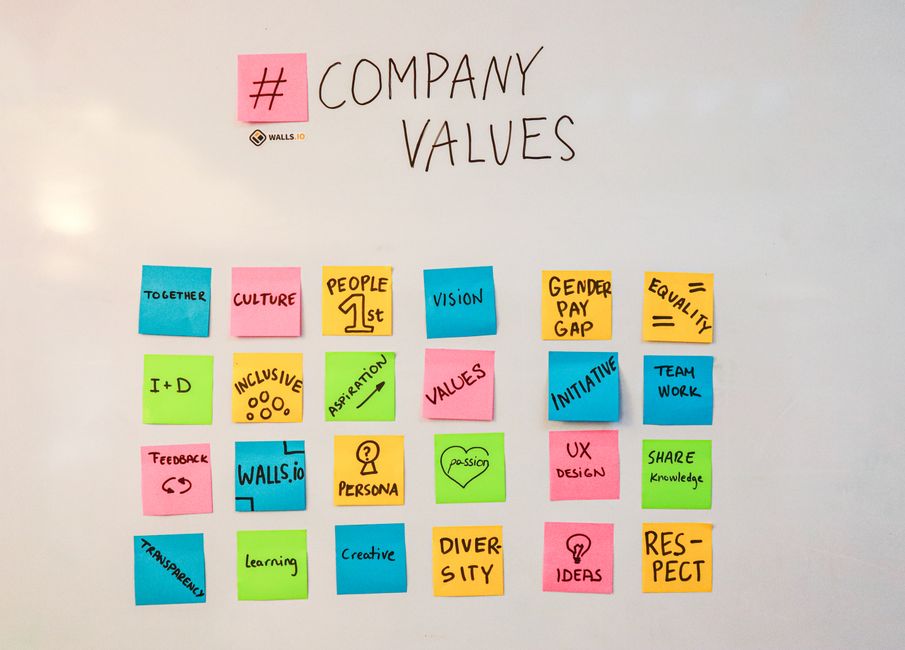
A value gap appears when a team's stated values differ from its repeated behaviour. A team may say it values learning, then punish people who surface uncertainty. It may praise collaboration while rewarding individuals for guarding information. The gap is useful evidence. It shows what the system currently encourages, even if the stated value reflects a genuine aspiration.
In Cape Town, Thabo, a service manager, is helping a regional bank shift customer queries from branch counters to a shared digital service. The organisation says it values accessible service. Some branch staff worry that the change will reduce their standing as trusted problem-solvers. Others fear losing the discretion to help someone whose need does not fit a standard category. Customers may also lose the reassurance of speaking face to face. At the same time, the shared service could make help available beyond branch hours. Thabo has to hold both possibilities in view.
He also notices a value gap. Leaders praise customer focus, but planning meetings discuss the change mainly in terms of reducing avoidable work. Staff hear that their experience matters, yet decisions about which cases must remain in person are made before their knowledge is invited. That behaviour makes assurances less credible. Thabo cannot resolve the tension with a slogan. He can make the decision criteria visible, ask frontline staff where human judgement matters, and tell customers which options will remain available. Some friction will remain. The new service may still feel less personal to some people.
Make the losses and evidence discussable
A useful way to investigate is to compare the change's promise with its likely effects on different groups. Keep the discussion concrete.
Compare stated values with observed behaviour
We value learning and early warnings.
We make decisions close to the work.
People who raise risks are asked to arrive with a complete solution.
Frontline staff learn about changes after key choices are settled.
- Name who may lose time, discretion, status, relationships or confidence.
- Ask people affected what they believe the change puts at risk.
- Compare stated values with decisions and repeated behaviour, not with the best intentions people report.
- Separate losses that can be reduced from trade-offs the organisation must openly accept.
Avoid assuming that everyone experiences the same change in the same way. A senior specialist might gain influence while a colleague loses autonomy. Nor should you treat every preference as a veto. The judgement is to listen carefully, identify legitimate costs, and make choices without pretending those costs do not exist.
What a case discussion found
A case discussion on organisational change in the digital era describes adaptive leadership as a mix of communication, empowerment, capability development and responsive decision-making, with technical fixes only one part of it2. In practice that means people get support to take part in the change, and leaders keep adjusting to what the work reveals.
Naming a loss often lowers the temperature. People no longer have to dress a concern up as a technical objection, and the value gap becomes something the team can discuss without anyone being accused of hypocrisy. In your next change conversation, ask two things: what do people stand to lose, and which of the values we claim is the current behaviour making hard to live by?
Checkpoint
Tell Technical Problems From Adaptive Ones

Checkpoint: diagnose a service change
What good looks like
A sound diagnosis names the work still left to do. Technical work draws on expertise and known procedures. Adaptive work asks people to learn, change how they behave or accept a loss, and mixed problems need both. From the balcony you can see repeated patterns, your own influence included. And comparing what a team says it values with what it actually does shows where the system is making change harder.
Dieses Kapitel
- Technical problem BIZ
- A problem that can be addressed through relevant expertise, established procedures or a known solution.
- Adaptive challenge BIZ
- A challenge that requires people to learn, change behaviour or revise priorities because expertise alone cannot provide the full response.
- Balcony perspective BIZ
- A way of stepping back from immediate activity to observe recurring patterns, relationships and one's own influence.
- Loss analysis BIZ
- Examining what people may have to give up through change, including status, autonomy, familiarity or valued relationships.
- Espoused values CUL
- The values a group says it holds, which can be compared with the behaviour its decisions and routines actually reward.
- Value gap CUL
- A difference between a team's stated values and its repeated behaviour.